
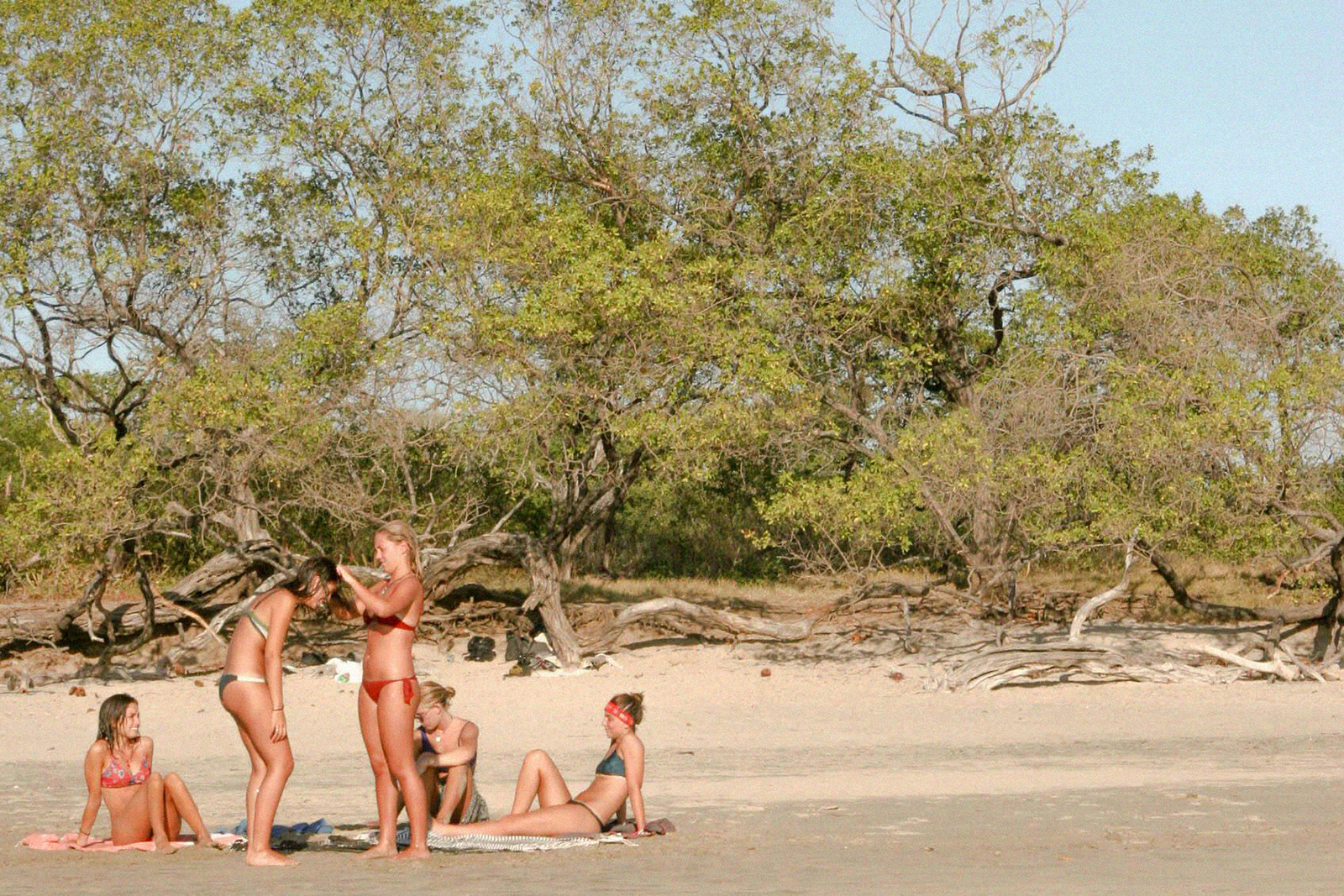
Here in Australia, our sun-soaked lifestyle isn’t just celebrated – it’s part of who we are. But as the new documentary and campaign ‘Conquering Skin Cancer’ wants us to know, skin cancer doesn’t have to be part of the Aussie dream.
As many Aussies will tell you, life’s good under the sun – but the shadow of skin cancer looms large. A new documentary, ‘Conquering Skin Cancer’, aims to help us see the light.
Dr Nedeljka Rosic is a passionate advocate and researcher. She’s also one of the documentary’s ‘champions’, leading a panel with medical doctors, scientists and skin cancer survivors this Sunday, December 8, at Pacific Fair.
“This panel will give us a chance to answer any questions regarding skin cancer detection, particularly in light of recent findings,” Dr. Rosic tells us. “It feels good to know that people are listening. Ignorance is not an option.”
Recent research by Dr. Rosic and her team highlights a stark reality: outdoor enthusiasts face exponentially higher risks. Swimmers, walkers, runners, and surfers are up to 120 times more prone to melanoma.
Even more frightening is the fact that Australia accounts for 10 percent of global melanoma cases.
“Australians need to treat this as an emergency,” she says. “We are losing people to something that is entirely preventable.”
So, what can be done?
For the last decade, Dr. Rosic’s research has focused on revolutionising sun protection through natural, marine-based sunscreens. These innovative products use biodegradable, non-toxic UV filters derived from algae and other natural bio-products.
“The sunscreens available now don’t provide the level of photostability or protection we need,” Dr. Rosic explains. “Our aim is to develop natural, eco-friendly solutions that are better for both our skin and the environment.”
It will be a game changer, but progress is hindered by limited funding and production challenges.
“We should look at better products, but also prevention and changing behaviours,” she says. “That’s the area where I’m really passionate.”
In the meantime, Dr. Rosic recommends other simple preventive measures: avoiding peak sun exposure. wearing protective clothing and using sunscreen diligently (and reapplying as needed). They’re the same tips we’ve all heard time and time again – so why aren’t they sinking in?
“It’s hard to understand,” she admits. “I think about that a lot, and I think it’s partially because it doesn’t happen straight away – people usually act on imminent danger. But in a decade or two, it will potentially be too late. I think changes in policy must be made.”
There’s also a tendency to justify spending time in the sun – vitamin D is good for us, after all. Dr. Rosic is the first to admit that, explaining how a lack of vitamin D during pregnancy has been linked to everything from acne to schizophrenia.
But she stresses the need for balance. Vitamin D is important, but we don’t need much to thrive.
“Fifteen minutes of early morning sun is enough for our vitamin D needs,” she advises.
And what about those other sun protection myths that have been swirling around online? That sunscreen can cause more cancers than it prevents?
“Toxicity is rigorously tested for all products – if they didn’t meet those safety standards, they wouldn’t be on the market at all,” she says. “It’s a ridiculous claim to say something like that. It’s ignorance and a lack of knowledge.”
She goes on to explain how sun protection is more than skin deep – our DNA can be damaged if we don’t protect our skin. There’s also the fact that the free radicals caused by sun exposure accelerate the aging process (something so many of us spend time and money trying to slow down).
“The natural products we are working on can do more than just absorb UV – they have anti-aging and antioxidant properties, too,” Dr. Rosic explains. “In the meantime, if you do get sunburnt, potentially taking some antioxidants may help to prevent the free radicals.”
Dr. Rosic invites everyone to attend the documentary screenings and panel discussions at Event Cinemas, Pacific Fair:
- Sunday, December 8, at 2.30 PM (with panel discussion)
- Wednesday, December 11, at 6.30 PM
“Knowledge is power,” she concludes. “If you are serious about sun protection, you won’t just look younger – you’ll live longer.”