
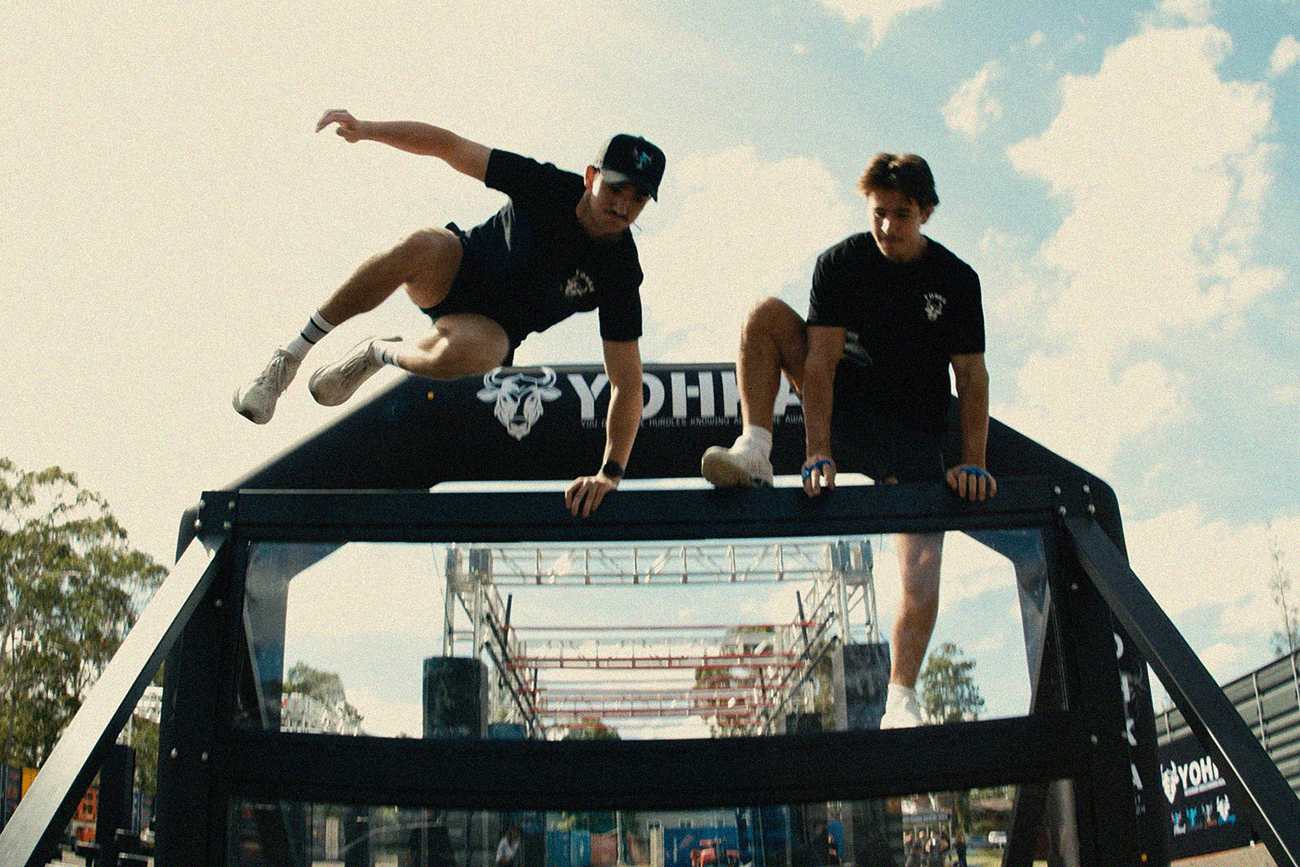
Have you ever wanted to try a new sport or fitness class, but chickened out at the last minute because you didn’t know what to expect? Us too. That’s why we created our ‘Beginner’s Guide’ series. It’s a place for us to chat to founders, trainers and business owners throughout the Gold Coast. To find out what to expect, what to bring and (often most importantly) what to wear, we’re going straight to the source.
In this instalment, we chat to Todd Liubinskas, CEO of YOHKA. Read on for your beginner’s guide to obstacle racing…
How did you get into obstacle racing? And when?
I have always been into sports. I played Rugby Union and Rugby League professionally. Then I started ultra-running, and later discovered obstacle racing around 10 years ago, which is a sport I have done around the world. Obstacle races are a lot of fun and are very rewarding. Shows like Ninja Warrior did a great job at highlighting the sport, but now, it is being taken to new heights, with a 100m OCR sprint being added into the Olympic Games in 2028 as part of the Modern Pentathlon.
It’s a sport that requires strength, speed and agility. It is social, great for teens and young adults, especially those who are looking to stay active and build confidence.
When an opportunity came up to become the CEO of YOHKA, I knew it was what I wanted to do. The opportunity to get this sport on the map at a larger scale, and to be at the forefront of it in the lead up to the Olympics was a dream job.
What do you love about it?
Obstacle racing tests so many components of fitness. Speed, agility, strength, PBs too, as some courses are always the same, you need to work to improve your time each time you try them. It is also a really social day out and a lot of fun.
Who should try it?
It’s a great sport for anyone to be honest. It requires a lot of upper body and core strength though, so work on those aspects of your fitness routine to make sure you are ready. We fine that there are a lot of teen and young adults who especially are keen on this spot.
What equipment do you need to bring? And what should you wear?
Wear light weight athletic clothes and shoes. Make sure whatever you wear is breathable and moves easily, as you don’t want your clothing slowing you down on the course.
How much experience is needed?
Anyone can try it, but the more experience you have the better you will be and the faster you will get. The key things to work on to get the most out of this course is upper body strength and grip strength, running/ sprinting/ speed, core strength.
What kind of training should you do in the lead up to see results/improvement?
Upper body work, with a focus on grip strength, core strength, running/ sprinting, especially if you are taking on the 100m course or the Pursuit (tag) course.
I would do some strength training every second day, and do some form of running most days. Mix up your training with longer run days and sprint days.
If you are looking to compete in the Pursuit Challenge, which is essentially a game of tag with two players on each team, you should practise tag with some friends, especially if you can find some obstacles to add into the mix.
If you are completely new to obstacle racing, the 100m OCR World Series only has two events, the 100m Stampede course and the Pursuit “Tag” course. You can do both events with a friend to make it less daunting. You are also welcome to come along and spectate as it is a great day out. Either way, everyone is welcome
Is it social?
Absolutely. The events themselves are designed to be both competitive and social, but part of it is the day out. The music, food trucks, and atmosphere. YOHKA has something for everyone
What are the short- and long-term benefits?
Improved cardiovascular fitness, strength/ conditioning, problem solving, strategising, it’s social, it’s fun and it is a memorable day out. The other thing is that events are popping up all over the world, so it is now also an event that gives you a reason to travel
What would you say to someone who is interested in obstacle racing, but scared to try it for the first time?
It’s only 100m, so jump in and give it a go. Each time you try it, you will get a feel for it and be able to strategise to go faster next time. The tag event is also lots of fun and you can do it with a friend.