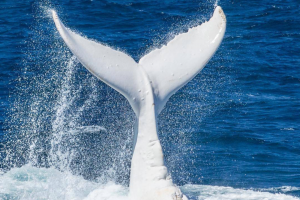
Perhaps the best reason to visit the Gold Coast in winter is to catch a glimpse of some other visiting tourists – of the sea-born, humpback variety. Keen to see the whales as they pass our golden coast in search of warmer waters? Here are our expert tips, and our favourite Gold Coast whale watching tours.
How to: spot whales from land
Spotting whales is a skill – one that takes practice, and patience. If you want to see your ‘whale tail tally’ skyrocket, consider these expert tips…
- Best vantage points: Burleigh Headland, Elephant Rock (Currumbin), Point Danger, Snapper Rocks and the Rainbow Bay SLSC balcony all offer elevated, unobstructed views over the water. The Spit, further north, is another solid option.
- Best time of day: Whales are active throughout the day, so there’s no need for a dawn mission – though calmer morning waters can make spotting a little easier.
- Best time in the season: Early season (June) brings playful young whales putting on a show; peak season (July–September) means the highest numbers passing through; late season (October) is when mums travel south with newborn calves.
- What to look for: Watch for the blow first – that telltale spray of mist is usually the giveaway before you spot a body. From there, keep an eye out for breaches, tail slaps and pods travelling together.
- Bring: Binoculars if you’ve got them, sunnies, and a bit of patience.
We highly recommend keeping track of your whale sightings in your phone, seeing how many whales you spot before the season is over. And if you’d rather get out on the water for a closer look – and an almost-guaranteed sighting – these Gold Coast whale watching cruises run from late May right through to early November.
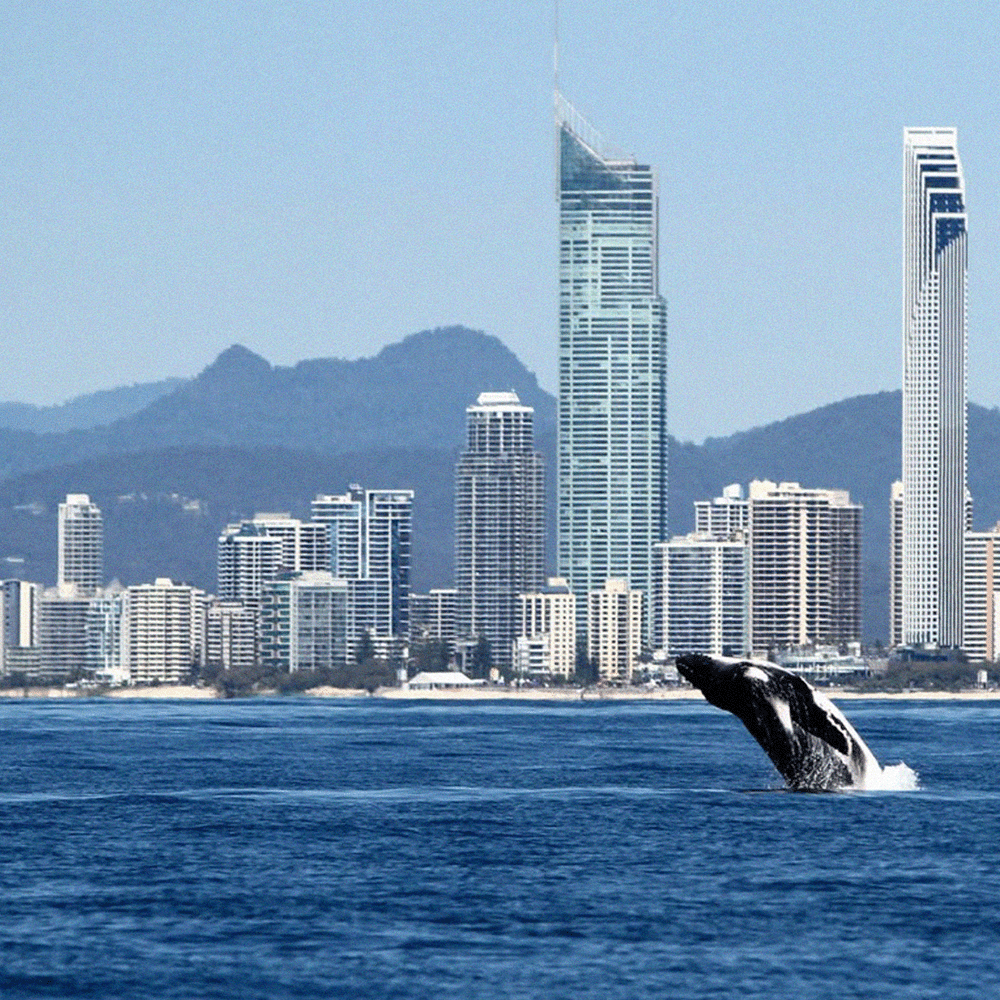
Spirit of Gold Coast
On a mission to promote awareness about humpback whales, Spirit of Gold Coast has been running whale watching cruises for 27 years, with a 99 percent sighting success rate – and a free return trip if you miss out. Their 24-metre catamaran offers 360-degree viewing, a marine biologist on commentary, and a fully licensed bar, plus complimentary tea, coffee and biscuits on arrival. Board from Aqua Adventure Centre, Marine Parade, Southport, just minutes from the heart of Surfers Paradise.
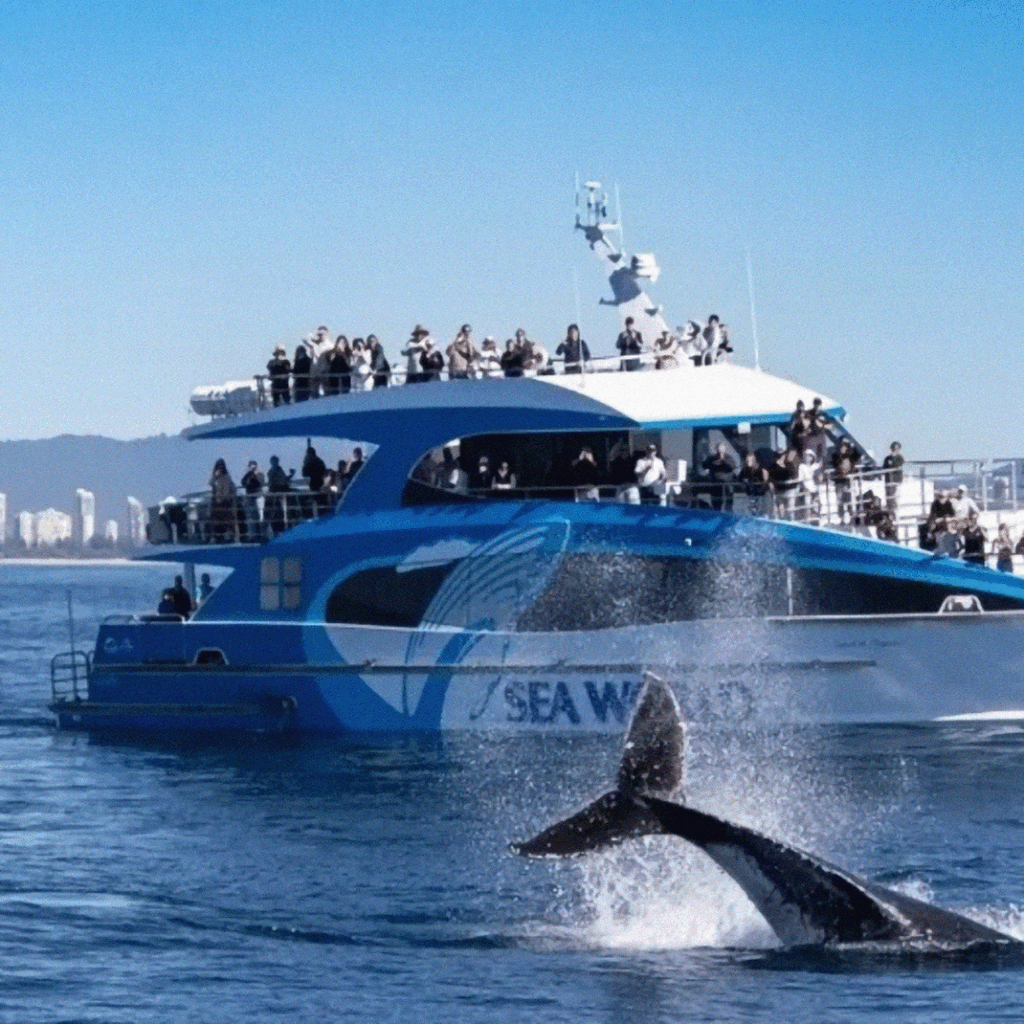
Sea World Cruises
Sea World Cruises’ whale watching season runs from late May to early November, with peak sightings from July to September. Purpose-built vessels with indoor and outdoor viewing decks depart the Sea World Cruises Terminal, Main Beach, for cruises of up to 2.5 hours, complete with live hydrophones to listen in on whale song. In the rare event no whales are spotted, you’ll get a free return cruise, valid for 12 months.
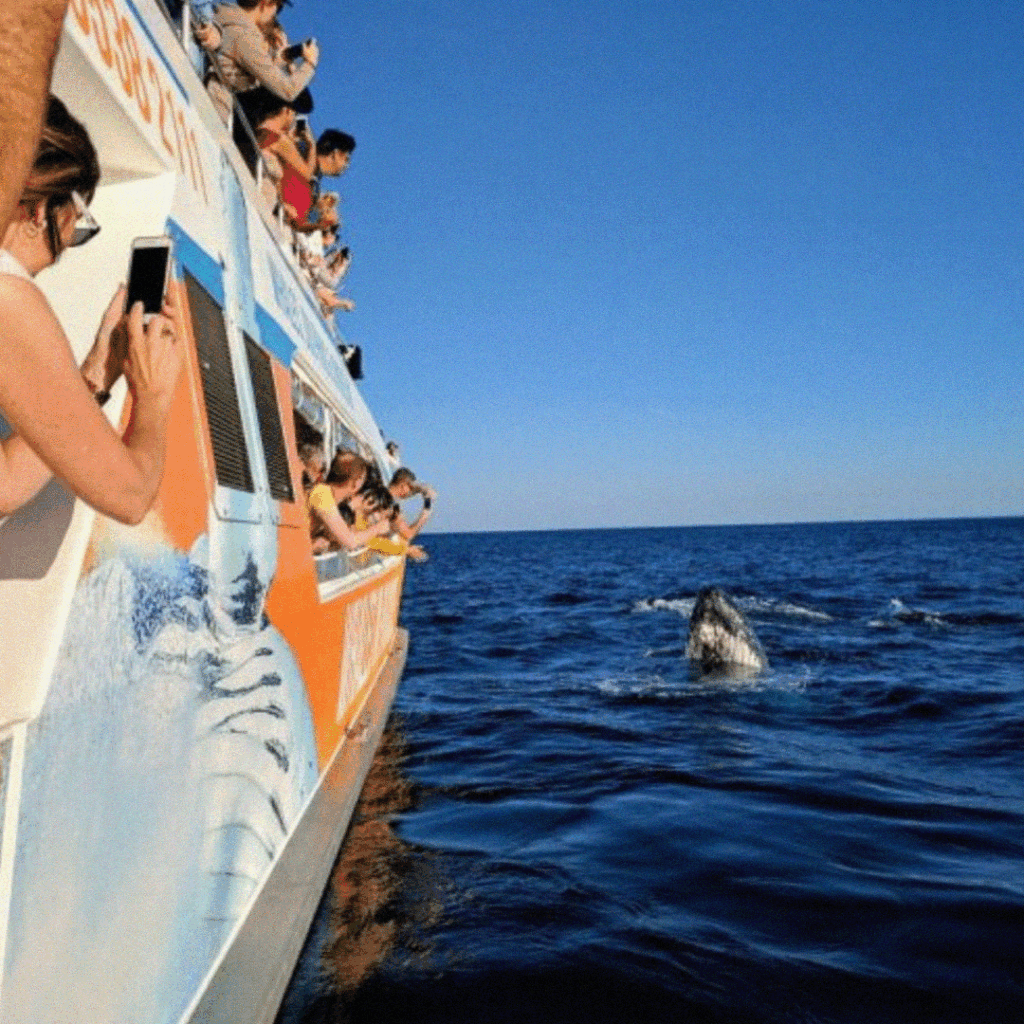
Whales in Paradise
Billed as the Gold Coast’s original whale watching operator, Whales in Paradise offers a boutique experience departing Surfers Paradise – guaranteed railside viewing, no crowds, expert commentary and a fully licensed bar onboard. It now code shares with Sea World Whale Watching, and carries the same 100 percent sighting guarantee, with a free return cruise on offer if none are spotted. Keep watch too for dolphins and green sea turtles.
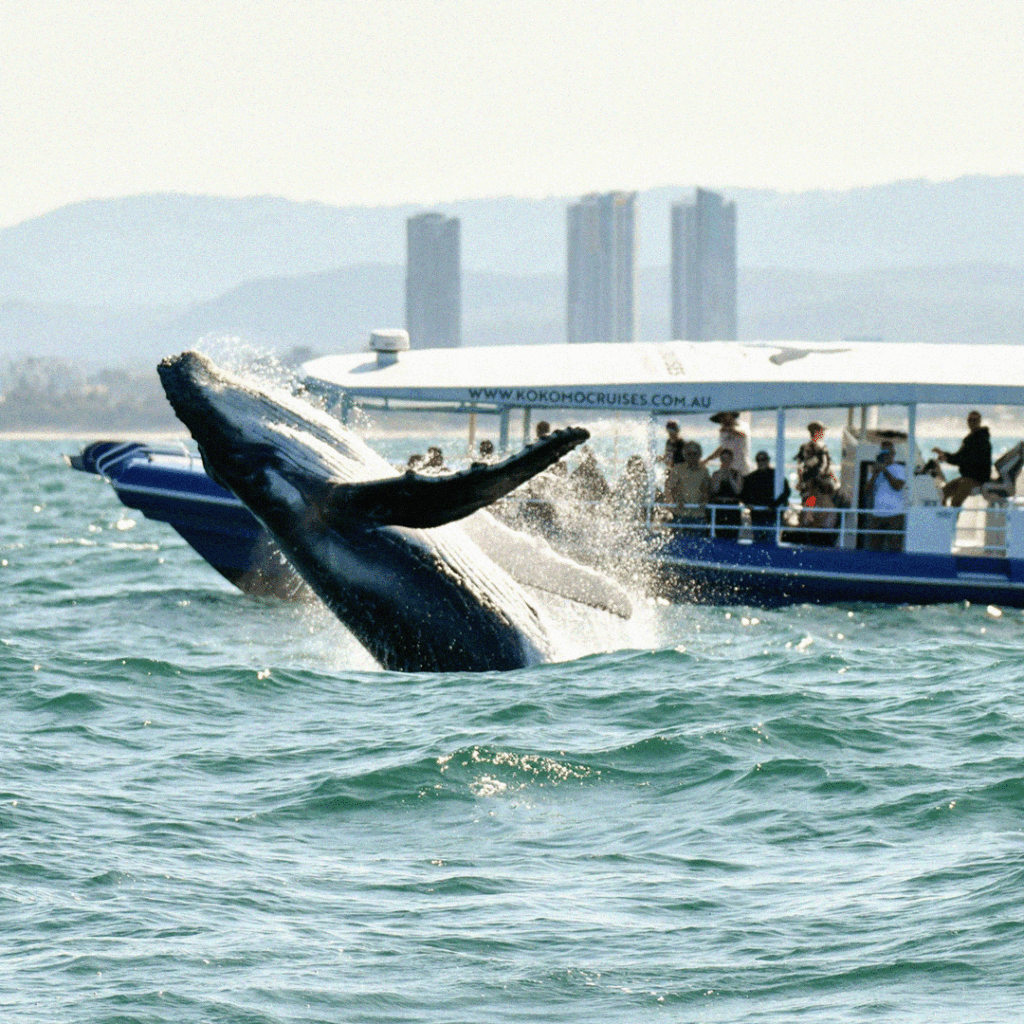
Kokomo Cruises
The newest name on the water, family-owned Kokomo Cruises runs 2.5-hour whale watching tours aboard Australia’s largest RIB, departing Marina Mirage. Expect small group sizes, 360-degree views, and an underwater camera feeding two onboard screens for a “whale eye view” when the action drops below the surface. Sightings are guaranteed, with commentary from the crew throughout, and snacks, drinks and photos available to purchase onboard.
Don’t miss the Gold Coast Whale & Ocean Festival!
The Gold Coast is celebrating the whale watching season in style, with a special event taking place this Saturday July 4 at Justins Park in Burleigh Heads – courtesy of local NGO Humpbacks and Highrises. Expect live music, activities for the whole family and informative exhibits that will help you learn more about these majestic creatures. Learn more here.
A little further afield…
As much as we love spotting whales on the Gold Coast, the awe-inspiring, soul-stirring, up-close whale watching encounters that you will find in Hervey Bay are more than enough reason to venture north. Between July and November, thousands of humpback whales travel the ‘Humpback Highway’ and arrive in the calm, protected waters of Hervey Bay. Unlike any other place along the Humpback Highway, the whales will stop and spend up to 10 days, resting, socialising and playing before continuing their trip back to the Antarctic for the summer months. This unique relationship gives reason to celebrate each year with the Hervey Bay Ocean Festival. It’s an eclectic event that recognises the importance of the ocean to Hervey Bay and promotes the conservation of the marine environment and animals that are unique and important to our region. Each year, the festival offers a calendar of colourful events including the Fraser Coast Kite Karnival, Hervey Bay Seafood Festival, Whale Parade, Paddle Out for Whales, and loads more.